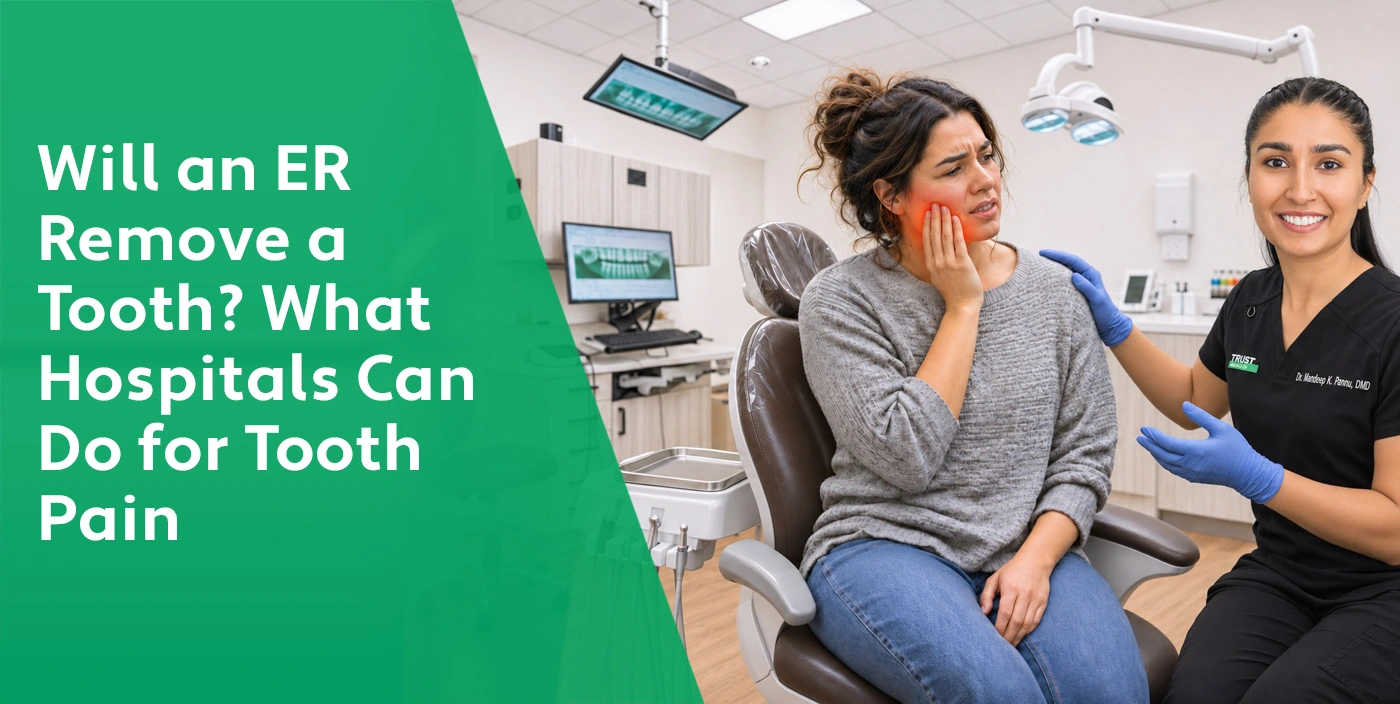
Will an ER Remove a Tooth? What Hospitals Can Do for Tooth Pain
Most emergency rooms do not routinely remove teeth. An ER can assess a severe toothache, provide temporary pain relief, and treat urgent medical complications, but tooth extraction usually requires a dentist or oral surgeon. Some hospitals have dental specialists or hospital-based dental services, so capabilities vary.
If you have trouble breathing or swallowing, uncontrolled mouth bleeding, or a serious facial injury, seek emergency medical care immediately. Call 911 for a life-threatening emergency. Do not delay because you are unsure whether the hospital can pull the tooth.
For tooth pain without those warning signs, a dentist is generally the best starting point because the tooth itself may need treatment.
Why Don’t Most ERs Pull Teeth?
A typical emergency department is organized to assess and stabilize medical emergencies. Routine tooth removal requires dental expertise and equipment that may not be available there.
An ER clinician may be able to reduce your discomfort without performing the procedure needed to resolve the underlying dental problem. That is why a hospital visit often ends with instructions to see a dentist.
Pain relief can help you through the immediate situation, but it does not necessarily mean the tooth has been repaired or the source of infection eliminated.
Can Hospitals Pull Teeth in Any Situation?
Yes. Some hospitals have dentists, oral surgeons, or dedicated dental clinics that can provide extractions. The American Dental Association describes hospital programs where dental professionals perform tooth removal on site.
However, a hospital having dental services does not mean every person arriving at its ER can receive an immediate extraction. The available specialists, clinical circumstances, and hospital arrangements affect what happens next.
If your condition is stable and you are specifically seeking tooth removal, ask whether a facility offers emergency dental treatment. If you have medical warning signs, go to the ER without delaying to investigate extraction availability.
What Can an ER Do for a Toothache?
Depending on your symptoms and examination, an emergency department may:
Assess swelling, infection, bleeding, or injury.
Provide medication for pain relief.
Numb the painful area with a local anesthetic or dental block when appropriate and available.
Prescribe antibiotics when clinically indicated.
Arrange additional treatment or specialist care for serious complications.
Routine fillings, crowns, root canals, and extractions are generally outside the services of a typical ER. You may still need a dental appointment after the hospital visit.
The purpose of the visit is to address immediate medical concerns and help stabilize your condition. Ask what follow-up is needed and how soon you should receive it.
Can I Go to the ER for Tooth Pain?
Yes. The important question is how urgently you need medical care and whether a dentist is available to treat the problem.
Go to the ER for Medical Warning Signs
Seek immediate emergency medical assessment if tooth pain is accompanied by:
Difficulty breathing, swallowing, or speaking because of swelling.
Swelling around your eye or neck.
Heavy bleeding that will not stop.
A major facial injury or suspected broken jaw.
Swelling that affects breathing or swallowing can become dangerous. These symptoms need hospital assessment rather than waiting for a dental office to open.
Facial swelling with a high fever or feeling seriously unwell also warrants urgent medical assessment, especially if symptoms are progressing.
Contact a Dentist Promptly for Pain Centered on a Tooth
A dentist is usually the most direct route to treatment for a severe toothache, a painful broken tooth, a lost restoration, or a suspected dental abscess without immediate medical warning signs.
A knocked-out permanent tooth also needs immediate attention; contact a dentist right away. If the injury involves serious facial trauma or uncontrolled bleeding, seek hospital care.
For a broader explanation of urgent dental problems, see our guide to common dental emergencies.
Can You Go to Urgent Care for Tooth Pain?
Yes. A medical urgent care center may help when you cannot reach a dentist and need assessment or temporary symptom relief.
Depending on its staffing and services, urgent care may evaluate your symptoms, recommend or prescribe medication, and sometimes provide local numbing. It usually cannot provide the dental procedure that resolves the problem. Call ahead if your condition is stable, because capabilities vary.
A medical urgent care center and an urgent dental clinic are different. A dental clinic is equipped to evaluate teeth and provide dental treatment. Check which type of facility you are contacting.
Medical urgent care is not a substitute for an ER when breathing, swallowing, major trauma, or uncontrolled bleeding is involved.
Will the ER Give Antibiotics for a Toothache?
Not every toothache needs antibiotics.
The American Dental Association recommends against antibiotics for most pain arising from the tooth’s pulp and surrounding root tissues when appropriate dental treatment is available in otherwise eligible adults. Antibiotics may be needed when infection causes systemic symptoms, such as fever or malaise, or when the clinician identifies another indication.
Treatment decisions also depend on the person’s health, diagnosis, and access to prompt dental care.
If you receive antibiotics, follow the prescribing clinician’s directions and arrange dental follow-up. Medication does not replace a procedure needed to treat the source.
What Should You Do After an ER Visit for Tooth Pain?
Follow the discharge instructions and arrange the recommended dental appointment, even if the pain improves.
When contacting the dental office, explain:
When the pain began and whether it is changing.
Whether you have swelling, fever, bleeding, or a recent injury.
What the hospital told you.
Which medicines were prescribed and when you started them.
Bring your discharge paperwork and medication list. This helps the dental team understand the assessment and care you have already received.
An ER visit may provide short-term relief, but dental follow-up is often needed to address the cause.
What Can You Do While Waiting for Care?
If you have no emergency warning signs and are waiting for professional care:
Gently rinse your mouth with warm water.
Carefully remove trapped food with dental floss if you can do so comfortably.
Consider an over-the-counter pain reliever only if it is safe for you, following the label or professional advice.
Use a cold compress on the outside of your cheek after a dental injury.
Do not place aspirin or another painkiller directly on the tooth or gums; it can burn the tissue. These measures provide temporary comfort and do not replace treatment.
If symptoms worsen or new swelling, fever, or swallowing difficulty develops, seek reassessment rather than continuing to wait.
Getting Help for Tooth Pain in West Chester, OH
Dentist at Towne Centre offers emergency dental care in West Chester, OH, including evaluation of urgent tooth pain, infections, and dental injuries. Same-day appointments are offered when availability permits.
Call (513) 597-1555 and describe your symptoms so the team can advise you about the next available visit. The office is located at West Chester Township, OH. You can also contact the practice for appointment information.
For breathing or swallowing difficulty, uncontrolled bleeding, or another life-threatening emergency, seek emergency medical care immediately.