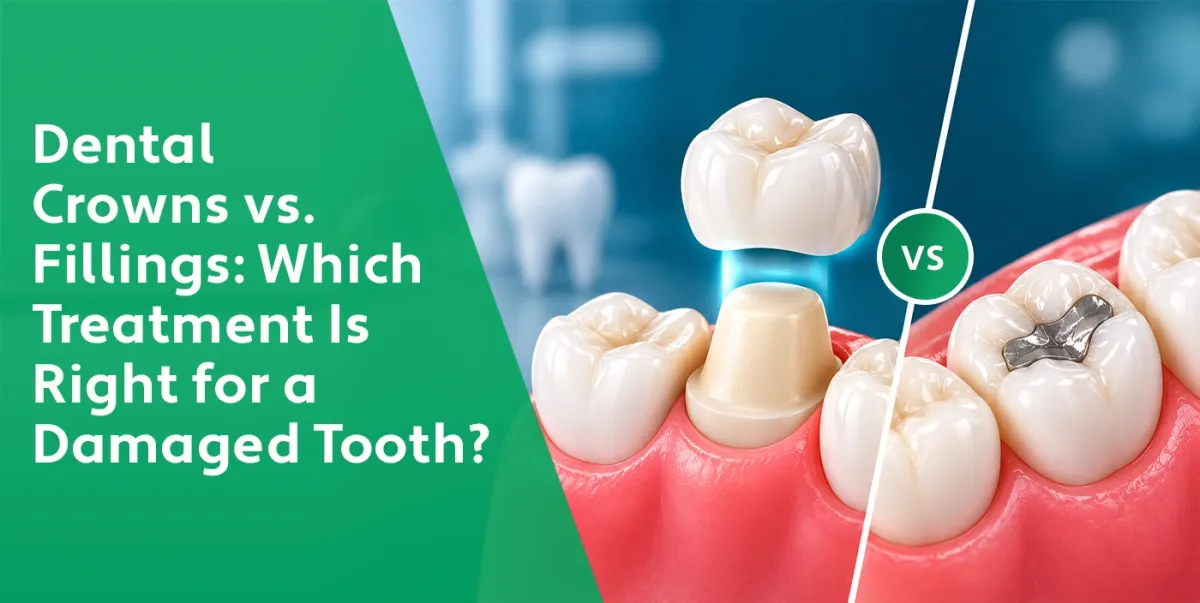
Dental Crowns vs. Fillings: Which Treatment Is Right for a Damaged Tooth?
A filling usually works well for a small or moderate cavity when enough healthy tooth remains. A dental crown may be needed when a tooth is badly weakened, broken, or unable to support a filling reliably. The decision depends on the condition of the remaining tooth, rather than simply how large the damage looks in the mirror. The American Dental Association identifies crowns as an option for teeth with large fillings when too little tooth remains to hold the filling.
Both treatments can restore chewing function and repair damage. Understanding what each one does can help you discuss your options and feel more comfortable with the recommendation.
What Is the Difference Between a Filling and a Crown?
A filling replaces a damaged area within a tooth. A crown is a custom-made cap that fits over the prepared visible portion of the tooth, restoring its shape and providing broader coverage.
The appointment schedule depends on the restoration and how it is made. Your dentist can explain the process for your treatment.
When Is a Dental Filling the Right Choice?
A filling is often appropriate when damage is limited and the surrounding tooth provides adequate support.
Tooth-colored composite fillings can be used on front or back teeth. The ADA describes them as suitable for small to medium-sized restorations exposed to moderate chewing pressure. Material selection also depends on the location and size of the cavity.
For example, a cavity in an otherwise sound tooth may need only a localized repair. Covering that tooth with a crown would require additional preparation that may offer little benefit for that particular situation.
Dentist at Towne Centre offers dental fillings in West Chester, OH, including tooth-colored composite options. The filling material is selected according to the tooth’s needs, appearance, and expected use.
When Might You Need a Crown Instead?
A crown becomes more relevant when replacing the damaged area with a filling would leave the tooth poorly supported.
Your dentist may recommend one when:
A large existing filling leaves little natural tooth around it.
A tooth has substantial breakage or structural weakness.
The remaining tooth needs protection from further fracture.
A large filling does not automatically mean you need a crown. The important question is whether the tooth around that filling can continue to function reliably.
Dentist at Towne Centre provides dental crowns to restore damaged and weakened teeth. Crown materials can include porcelain, ceramic, or metal, with the choice depending on the treatment plan.
What If the Tooth Is Cracked?
Cracks require a closer assessment because their location and depth affect treatment.
A small broken portion of the chewing surface may be restored with a filling or crown. A deeper crack involving the pulp—the tissue containing nerves and blood vessels inside the tooth—may also require root canal treatment.
A crown can help protect a cracked tooth, but it does not heal the crack or guarantee that the tooth can be saved. Some fractures are too extensive for a predictable restoration.
How Does a Dentist Decide Between a Crown and a Filling?
The recommendation should follow an examination of the tooth and its function. Useful questions include:
How Much Healthy Tooth Remains?
The visible hole is only part of the picture. Your dentist considers how much usable tooth remains and whether it provides enough support for the proposed restoration.
Where Is the Damage?
The size and location of a cavity influence the choice of filling material. A repair near a chewing surface may face different demands from one on another part of the tooth.
Is the Pulp Healthy?
A filling or crown repairs the tooth’s outer structure. If the pulp is irreversibly inflamed or infected, that problem needs treatment too.
Deep decay, cracks, and repeated procedures can affect the pulp. Root canal treatment removes the inflamed or infected tissue; a crown or another restoration then restores the tooth’s function.
Before agreeing to treatment, consider asking:
“Can you show me what makes this tooth suitable for a filling or crown?”
“What is the concern if we use a filling?”
“Is there a more conservative option that would still protect the tooth?”
“What additional treatment, if any, does the tooth need?”
Could an Inlay or Onlay Be an Option?
Some teeth fall between a straightforward filling and a full crown.
An inlay or onlay is a custom-made restoration that replaces part of the tooth. It may be appropriate when the damage is too extensive for a direct filling but does not require full crown coverage.
Dentist at Towne Centre lists inlays and onlays among its restorative dentistry services. If you are concerned about how much tooth preparation a crown requires, ask whether a partial restoration is suitable.
What Happens During Treatment?
Getting a Filling
For a typical composite filling, the dentist numbs the area as needed, treats the damaged portion, and places the filling material. The composite is hardened with a curing light, shaped, and polished. Your bite is checked before you leave.
Getting a Crown
For a lab-made crown, the dentist prepares the tooth and takes an impression or scan. A temporary crown protects it while the final restoration is made. At the placement appointment, the dentist checks the crown’s fit and secures it.
Some practices use technology that allows crown fabrication in one visit. Ask the office which approach your treatment will involve.
Crown vs. Filling Cost: What Should You Consider?
A crown generally costs more upfront because it involves additional preparation and a custom restoration. The amount you pay depends on the material, treatment required, and your dental benefits.
Ask for a written estimate that includes any associated treatment. If a filling and crown are both reasonable options, discuss their expected benefits and limitations alongside the price.
Dentist at Towne Centre offers an in-house membership plan and financing options. Its team can help with insurance claims, although your insurer determines coverage. Visit the practice’s financial Option or contact the office to discuss your circumstances.
When Should You Have a Damaged Tooth Checked?
Contact a dentist promptly if you notice pain when chewing, a broken tooth, lingering sensitivity, or a lost restoration. Symptoms can overlap, so pain alone cannot tell you whether you need a filling, crown, or root canal.
Dentist at Towne Centre offers emergency dental care in West Chester, with same-day appointments available for urgent problems when scheduling permits.
Facial swelling or fever associated with tooth pain needs urgent evaluation. If swelling makes breathing or swallowing difficult, seek emergency medical attention immediately.
Frequently Asked Questions
Does Getting a Crown Mean I Need a Root Canal?
No. A crown can restore a weakened tooth whose pulp is still healthy. Root canal treatment addresses inflammation or infection inside the tooth and is recommended when the diagnosis calls for it.
Does Every Tooth Need a Crown After a Root Canal?
No. Back teeth generally need crowns because they carry substantial chewing loads. Front teeth may be restored without a crown, depending on how much tooth remains and its condition.
Will a Crown Last Longer Than a Filling?
There is no guaranteed comparison for an individual tooth. Material, damage, bite, and care affect how long a restoration lasts. Both can require repair or replacement. Continue brushing with fluoride toothpaste, cleaning between teeth, and attending dental checkups.
Can a Cracked Tooth Need Treatment Even If It Does Not Hurt?
Yes. Some fractures cause little discomfort. The type and extent of the crack matter more than pain alone, so have a suspected crack examined.
Discuss Your Options at Dentist at Towne Centre
If you have a cavity, damaged tooth, or failing filling, an examination can clarify which repair offers appropriate support while preserving healthy tooth.
Dentist at Towne Centre provides fillings, crowns, and other restorative treatments in West Chester, OH. Call (513) 597-1555 or request an appointment to discuss your tooth and treatment options.